


Gocrypto: Crypto Trading
4.55.18K Reviews
App Specs
- Version
- 1.3.11
- Updated On
- License
- Free
- Downloads
- 10,000,000+
- Developer
- Gocrypto: Crypto Trading & Investment Simulator
- Categories
- Business
- Platform
- Android, iOS
Screenshots

 Analysis by AppCompare
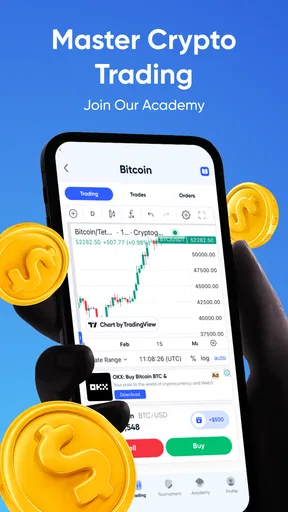
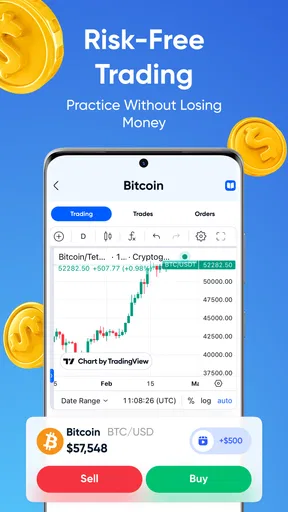
Learning crypto trading is difficult when every mistake can involve real money. Gocrypto: Crypto Trading takes a safer route by turning practice into a simulation, so I can explore market decisions without treating my first experiments as financial commitments. That central idea makes it more useful than a simple glossary or a collection of market headlines, especially for someone who wants to understand how a trade feels before opening an account elsewhere.
I reviewed it as a free Business app from Gocrypto: Crypto Trading & Investment Simulator. It is aimed at mature users, carries a Mature 17+ rating, and runs on Android 8.0 or later. The app reached version 1.3.10, and its popularity is easy to notice: it has passed ten million installs, with an average score of 4.5 from roughly two hundred thirty thousand ratings and about five thousand one hundred written reviews. Those figures do not replace personal testing, but they do suggest that the simulator has found a substantial audience.
Why the real-time simulation is the important feature
The strongest part of the experience is not the word “crypto” by itself; it is the chance to make decisions against changing market conditions without immediately putting a bank balance at risk. In a normal exchange app, the pressure to act can distract from the lesson. Here, the simulation creates room to ask better questions: Why did I enter now? What would make me leave? Was the decision based on a plan, or did I simply react to a sudden move?
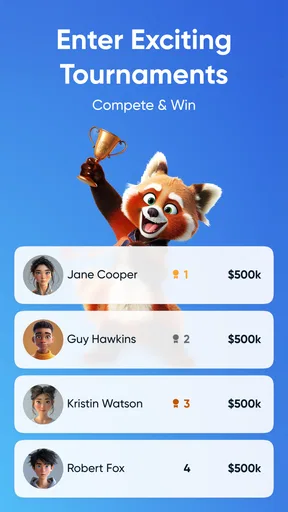
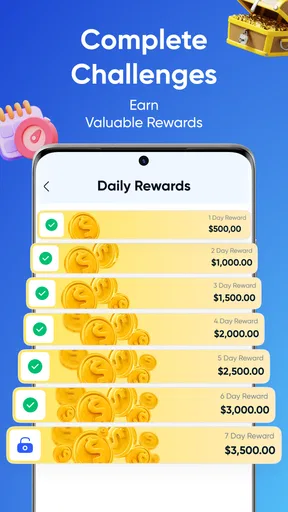
That distinction matters because beginners often confuse recognizing a price movement with understanding a trade. A chart can look obvious after the fact, while a live-feeling simulation forces me to decide before the result is known. The app’s challenge-oriented approach adds a sense of progress to that process. I found that useful when I treated each attempt as a small experiment rather than as a contest to produce the biggest imaginary gain.
The most valuable habit is recording the reason for a decision before seeing its result. Even if I only do this mentally, it separates a repeatable method from luck. A winning trade made for a weak reason is still something to question, and a losing trade made according to a sensible plan is not automatically a failure. That mindset is where a simulator can teach more than a passive article.
What it feels like to use the app
I approach Gocrypto as a practice desk rather than a replacement for a trading platform. The point is to observe movement, choose an action, and review what happened. That workflow is simple enough for a first session, but it also gives more experienced users a controlled place to test discipline. I would not use it to search for guaranteed predictions, because a simulation can demonstrate decision-making without proving that the same approach will work with real funds.
The real-time element changes the pace of learning. Reading about volatility lets me agree with the concept in theory; watching a simulated position develop makes the emotional side more visible. I notice whether I want to close too quickly, chase a move after it has already started, or keep waiting because I do not want to admit that my original idea was wrong. Those reactions are practical information about my habits, not just about the market.
Worth Reading Before You Choose

Flipboard Shows What News Apps Must Do Beyond the Feed

Switching to Android Auto Means Rethinking Your Driving Routine

Google Calendar Makes a Crowded Week Easier to Manage

Ludo King Makes the Most of the Minutes Between Plans

Baby Panda World Brings Quick Play to Modern Phones, but Its Game Library Feels Busy

ESPN’s Live Game View Makes Following Close Games Easier
The challenge format can also make repetition less tedious. Instead of opening the app only to stare at a chart, I have a reason to make a decision and then evaluate it. My advice is to resist treating every challenge as a score to maximize. A better approach is to repeat a similar decision under different conditions and compare the reasoning. That turns the app into a training routine instead of a quick distraction.
A useful routine for beginners
When I introduce a newcomer to this kind of simulator, I suggest starting with one rule at a time. For example, the first session can focus on avoiding impulsive entries. The next can focus on deciding in advance what would invalidate the idea. A later session can examine whether the temptation to trade increases after a loss. Keeping the objective narrow makes the result easier to understand.
Another practical technique is to pause after each completed attempt and write three short notes: what I expected, what actually happened, and what I would change. This is more useful than judging the result alone. If the simulated outcome was positive, I can check whether the timing and reasoning were sound. If it was negative, I can distinguish a bad plan from an ordinary unfavorable result.
I also recommend separating observation from action. Before choosing anything, I spend a moment describing the current situation in plain language. Is the movement steady, abrupt, or unclear? Am I acting because I see a setup, or because I am afraid of missing it? That small pause is one of the hidden benefits of practice: it trains the gap between seeing a signal and reacting emotionally.
How Gocrypto works in everyday practice
A realistic use case would be someone who has heard friends discuss crypto trading and is curious but uncomfortable with the risk. Instead of transferring money immediately, that person can use the simulator after work for a short, focused session. They might choose one challenge, make a decision, and review the result before dinner. The value is not in pretending that imaginary success equals real expertise; it is in discovering whether the person enjoys the process and can follow a plan.
For me, the best sessions are short. A long stretch of constant decisions can encourage overtrading, even in a practice environment. A limited session makes it easier to stop when the original learning goal has been met. I would rather finish after one thoughtful attempt than continue making random choices simply because the app is available.
The app is also useful for preparing questions before moving to a conventional exchange. A beginner may learn that terms such as entry, exit, volatility, and risk tolerance are not abstract vocabulary. They describe decisions that have to be made under uncertainty. Once those questions become familiar, comparing real platforms becomes easier because the user can focus on fees, security, available assets, and order controls instead of trying to learn every concept at once.
That is where I see a clear difference from the usual alternatives. A news app can tell me what the market has done, but it does not make me choose. A video course can explain a strategy, but it cannot reproduce the need to act while conditions change. A real exchange gives authentic consequences, but it is a poor classroom for someone who has not yet developed basic discipline. Gocrypto sits between those options: more active than reading, less financially exposed than live trading.
Questions I would answer before installing
One natural question is whether this is suitable for someone completely new to crypto. I think it is, provided that the user treats it as practice rather than financial advice. The simulation can make ideas easier to grasp, but beginners still need to learn that real markets include costs, execution differences, security concerns, and genuine losses. The app is a starting point for understanding decisions, not a shortcut around responsible research.
Another question is whether experienced traders will benefit. They may, but the value is narrower. Someone who already has a tested routine may use the challenges to examine patience or consistency, yet the simulator will not replace the information and pressure of a live account. Its strongest audience is the learner who needs a low-risk environment to build a process, not the professional looking for a complete trading terminal.
Users may also wonder whether the free price makes it worth trying. In my view, yes, if the goal is exploration and practice. Free access lowers the barrier to testing the idea, but it should not encourage careless behavior. Because there is no purchase commitment to force a serious study plan, I would set my own limits: a small number of sessions, a clear learning objective, and notes after each attempt.
The Mature 17+ rating is another reason I would not present it as a casual game for children. Crypto trading involves financial concepts and potentially serious consequences when transferred to the real world. A teenager or adult who uses it should understand that simulated results are not proof of future performance. Parents and educators should frame it as financial-literacy practice, not as an invitation to speculate.
The trade-offs behind the safe approach
The biggest advantage of simulation is also its biggest limitation: the consequences are not real. Without the possibility of losing personal money, I may behave more boldly, hold positions longer, or ignore stress that would appear in a live account. A successful simulated run can therefore create false confidence if I do not ask what would change when the balance belongs to me.
Real-time practice can introduce a second problem. It may make the experience feel urgent, and urgency is not always useful. If I open the app repeatedly just to catch every movement, I am training restlessness rather than judgment. The healthiest way to use it is to decide when I will practice and what I am trying to learn, rather than allowing every market change to demand attention.
There is also a trade-off between accessibility and depth. A focused simulator is easier to approach than a full exchange interface, but it cannot be expected to teach every part of cryptocurrency ownership. Someone preparing to use real funds still needs separate knowledge about account protection, transaction costs, taxes where applicable, and the difference between a simulated action and an order executed in a live market. I consider that boundary important, not a defect to hide.
Compared with a standard educational app, Gocrypto feels more engaging because I have to make choices. Compared with a real exchange, it is less intimidating and less dangerous for experimentation. Compared with a paper spreadsheet, it offers a more immediate challenge-driven experience. However, a spreadsheet or journal may be better for someone who wants to test a detailed long-term plan, because writing assumptions down can reveal flaws that quick challenges might overlook.
Small details that improve the learning value
My first tip is to create a “no-trade” rule. A simulator can teach that waiting is an action too. If the situation is unclear, deliberately doing nothing and then reviewing the outcome helps challenge the belief that constant activity equals progress. This is especially useful for users who open trading apps whenever they feel bored.
My second tip is to repeat the same idea rather than constantly switching approaches. If I change the strategy after every result, I cannot tell what caused the difference. Repeating a simple rule across several challenges gives me better evidence about my consistency. The app becomes a way to test behavior, not a slot machine for chasing a pleasing outcome.
My third tip is to use the challenge structure as a self-control test. I can decide beforehand how many attempts I will make and stop even if the last result was disappointing. This exposes revenge-trading habits in a relatively safe setting. It is a more meaningful exercise than trying to finish with an impressive imaginary balance.
A fourth insight is to compare confidence before and after the result. If I felt certain before acting but cannot explain why afterward, the confidence was probably emotional. If I can describe the reasoning even when the result went against me, I am building a more reliable process. That reflection is where Gocrypto can offer value beyond its immediate interface.
Who gets the most from Gocrypto
I would recommend it first to curious beginners, students of personal finance who want an interactive exercise, and cautious users who are not ready to risk money. It is also a reasonable companion for someone taking a broader crypto course: the course can provide concepts, while the simulator gives those concepts a decision-making context. The free price makes experimentation straightforward, and the large install base means a new user is joining an established audience rather than trying an obscure tool.
I would be more selective with users who already trade actively. They may appreciate a place to rehearse discipline, but they should not mistake the app for a live brokerage service or a complete portfolio-management solution. If the main need is real execution, detailed account controls, or direct ownership of assets, a conventional exchange is the more appropriate tool. If the main need is to practice without financial exposure, this app is better aligned.
I would also tell highly risk-sensitive readers that the subject itself may be uncomfortable. Even simulated market movement can encourage compulsive checking or overconfidence. The right response is not to force a routine, but to set boundaries and stop if the experience becomes stressful. A business app about crypto should be approached with the same care as the activity it imitates.
After testing its central idea, my opinion is positive but deliberately limited. Gocrypto makes the learning stage more active by combining real-time simulation with challenges, and that gives beginners a practical way to examine their choices before involving real money. Its greatest strength is the space it creates between theory and consequence. Its greatest weakness is that no simulation can reproduce every cost, emotion, or responsibility of live trading.
If I were recommending it to a friend, I would say: install it to practice patience, decision-making, and self-awareness, not to chase imaginary wins. Use short sessions, write down the reason behind each move, and treat every result as feedback. With that approach, this free app is a useful introduction to crypto trading; without it, the challenge format could simply encourage more impulsive clicking. It is available for Android users on version 8.0 or newer, and its release on June 17, 2024, gives it a relatively modern place in the category.
Pros
- Clean interface makes market tracking easy for beginners.
- Supports quick buying and selling of supported cryptocurrencies.
- Price charts help users follow short-term market movements.
- Portfolio view makes it simple to monitor holdings in one place.
- Useful alerts can help users react to important price changes.
Cons
- Trading options may be limited compared with larger global exchanges.
- Cryptocurrency prices can change quickly
- increasing the risk of losses.
- Fees and spreads may vary depending on the transaction and payment method.
- Some features may require identity verification before they become available.
- Availability of coins and services can depend on your country or region.
FAQs for Gocrypto: Crypto Trading
What is Gocrypto: Crypto Trading, and who is it designed for?
Gocrypto: Crypto Trading is a mobile cryptocurrency app designed to help users monitor digital assets, review market prices, and manage trading activities from an Android or iOS device. It may appeal to beginners who want a simple way to follow crypto markets, as well as more experienced users looking for convenient access while away from a desktop platform. Before using it, review the available features, supported countries, and listed assets.
Can beginners use Gocrypto: Crypto Trading safely and confidently?
Beginners can use Gocrypto: Crypto Trading as an introduction to cryptocurrency markets, but the app does not remove the risks associated with trading. New users should first learn about market orders, price volatility, transaction fees, wallets, and account security. It is advisable to begin with small amounts, enable every available security option, and avoid investing money that would be difficult to replace if the market moves unexpectedly.
What cryptocurrencies and trading features are available in the app?
The cryptocurrencies, trading pairs, and tools available in Gocrypto: Crypto Trading may depend on the current version of the application, your location, and the services supported by the platform. Users should check the in-app asset list before downloading or depositing funds. Depending on the account and region, features may include price charts, market tracking, buy and sell functions, portfolio information, order management, and transaction history.
Are there fees, limits, or identity verification requirements?
Users should expect that cryptocurrency services can apply trading fees, withdrawal charges, network fees, spread costs, minimum transaction amounts, or account limits. Gocrypto: Crypto Trading may also require identity verification before certain functions become available, particularly deposits, withdrawals, or higher transaction volumes. Always read the current fee schedule and verification policy inside the app, since these details can change and may vary by country or payment method.
How can users protect their account and funds when using Gocrypto?
Account security is especially important when using any cryptocurrency trading application. Create a unique, strong password, activate two-factor authentication if available, and keep the app updated through an official store. Never share verification codes, recovery phrases, or private keys with another person. Before transferring funds, carefully confirm wallet addresses and network details, because crypto transactions are often irreversible and support may not be able to recover mistakes.


